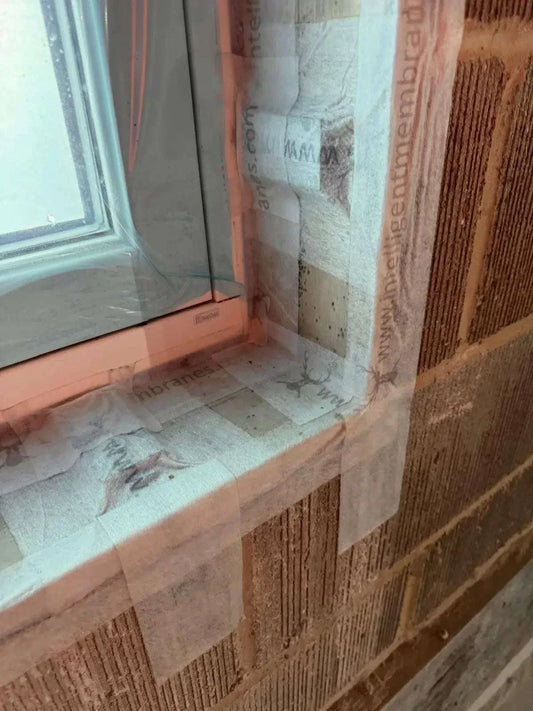
PASSIVE PURPLE ON LIGHT GAUGE STEEL

How It Works
Passive Purple is a liquid-applied airtight and vapour control membrane that’s sprayed or rolled directly onto the internal face of the LGS wall buildup, typically over the sheathing board. Once applied, it dries to form a continuous, flexible, airtight film that fully seals all gaps, joints, and penetrations, even around complex steel connections.
Because Passive Purple is liquid-applied, it eliminates the need for tapes or membranes that are difficult to fit around the studs, screws and junctions typical of steel framing. The result is a smooth, seamless barrier that delivers exceptional airtightness and vapour control, even in areas where other systems fail.
Why Passive Purple is ideal for Light Gauge Steel
Liquid-applied and seamless, Passive Purple seals the countless junctions, fixings and penetrations that make steel frames so hard to make airtight.
-

Seamless coverage
Sprays around brackets, junctions and fixings where tapes can’t reach.
-

Bonds to any substrate
Adheres to steel, boards, concrete and insulation interfaces for a continuous seal.
-

Below 0.6 ACH airtightness
Delivers exceptional airtightness with correct detailing – applied fast by spray or roller.


Typical Build-Up Example
- External cladding
- Sheathing board (e.g. cementitious or OSB)
- Passive Purple applied to internal face
- Insulation layer
- Internal lining (e.g. plasterboard)
Application Details
Apply by airless spray or roller directly to clean, dry sheathing boards. Minimum wet film thickness: 0.6mm (approx. 0.3mm dry). Seal all penetrations, joints, and interfaces for a continuous barrier. For best adhesion, ensure surfaces are free of dust, oil, or grease.
PASSIVE PURPLE ON TIMBER FRAME

How It Works
Passive Purple is a liquid-applied airtight vapour control membrane designed for use on the warm side of the insulation. In timber frame builds, it’s typically applied directly over OSB or sheathing boards, forming a continuous, flexible, and seamless coating that seals every joint and
junction.
The coating fully adheres to the timber substrate, bridging gaps and imperfections that tapes or membranes can’t reliably cover. Once dry, it becomes a robust, elastic film that moves with the building, ensuring long-term airtightness without cracking or peeling.
Why Passive Purple is Ideal for Timber Frame
Applied over OSB or sheathing on the warm side of the insulation, Passive Purple forms a continuous, flexible airtight layer that moves with the timber frame.
-

Perfect bond to OSB & ply
Bonds strongly to OSB, ply and sheathing boards.
-

Seals every junction
Covers complex junctions, corners and penetrations effortlessly.
-

Vapour control built in
Helps regulate internal humidity and prevent condensation.


Typical Build-Up Example
- External cladding
- Sheathing board (OSB or ply)
- Passive Purple airtight layer
- Insulation (between or over studs)
- Internal lining (plasterboard or finish layer)
Application Details
Apply via airless spray or long-haired roller onto clean, dry OSB or sheathing boards. Minimum wet film thickness: 0.6mm (approx. 0.3mm dry). Pay special attention to junctions, penetrations, and service zones. Allow to dry fully before applying subsequent coatings or finishes
Shop Passive Purple
-

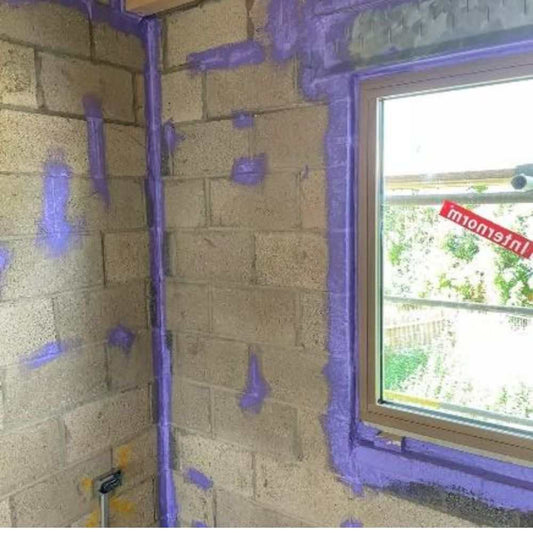 In offertaIn offerta
 -

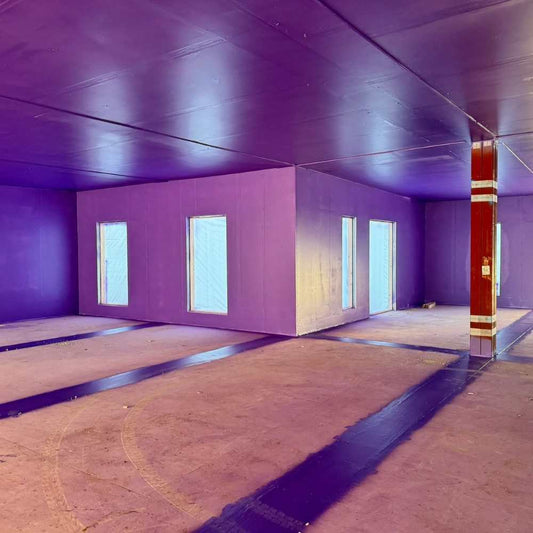
Passive Purple - Vapour Control, Airtight & Smoke Tight Paint (11.4kg) - Spray / Roller Applied
Short spec • 11.4 kg
BBAIn offerta -
Airtight Tape
Short spec • 2.0 kg
-

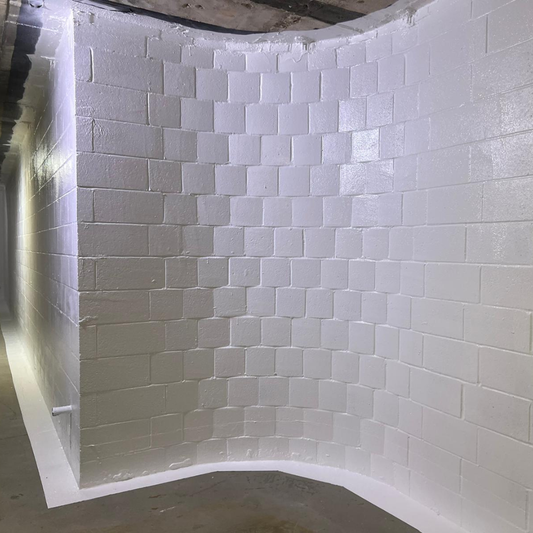
Airtight White - Vapour Control, Airtight & Smoke Tight Paint (11.4kg) - Spray / Roller Applied
Short spec • 11.4 kg
Passivhaus BBAIn offerta